Step 1: Ensure the Loan is Fully Paid
Before initiating the cancellation process, confirm that you have fully settled your car loan. The bank or financing company will issue a Certificate of Full Payment as proof.
Step 2: Visit Your Bank or Financing Institution
Go to the bank or financing company to obtain the Release of Chattel Mortgage (RCM) and the Promissory Note (PN) document. These two documents are usually provided together upon full loan payment. Some institutions may also guide you on the next steps.
Step 3: Gather the Required Documents
Prepare the following documents to start the process:
- Original Certificate of Registration (CR)
- Official Receipt (OR) of Registration
- Certificate of Full Payment from your bank or financing institution
- Promissory Note (PN) (issued by the bank upon full loan payment)
- Release of Chattel Mortgage (RCM) (issued by the bank after the loan is paid off)
- Valid Government-issued ID
- Authorization Letter (if someone else will process on your behalf)
Step 4: Visit the Registry of Deeds (ROD)
Submit the required documents to the Registry of Deeds (ROD) where the mortgage was originally registered. If you are unsure where your mortgage was registered, check your existing documents, such as the Release of Chattel Mortgage (RCM) or your car loan agreement, which typically indicate the relevant ROD office.
Documents to submit:
- Copy of OR/CR
- Original Release of Chattel Mortgage (RCM)
- Promissory Note (PN)
Processing time varies by ROD, typically taking 7 to 15 days before you can obtain the canceled Release of Chattel Mortgage (RCM). You will also receive an Official Receipt, which is required for the next step at the LTO.
Note: Fees may vary based on the unit rather than the location.
Step 5: Proceed to the Land Transportation Office (LTO)
Bring all the required documents, including the updated record from the Registry of Deeds, to the LTO branch where your vehicle is registered.
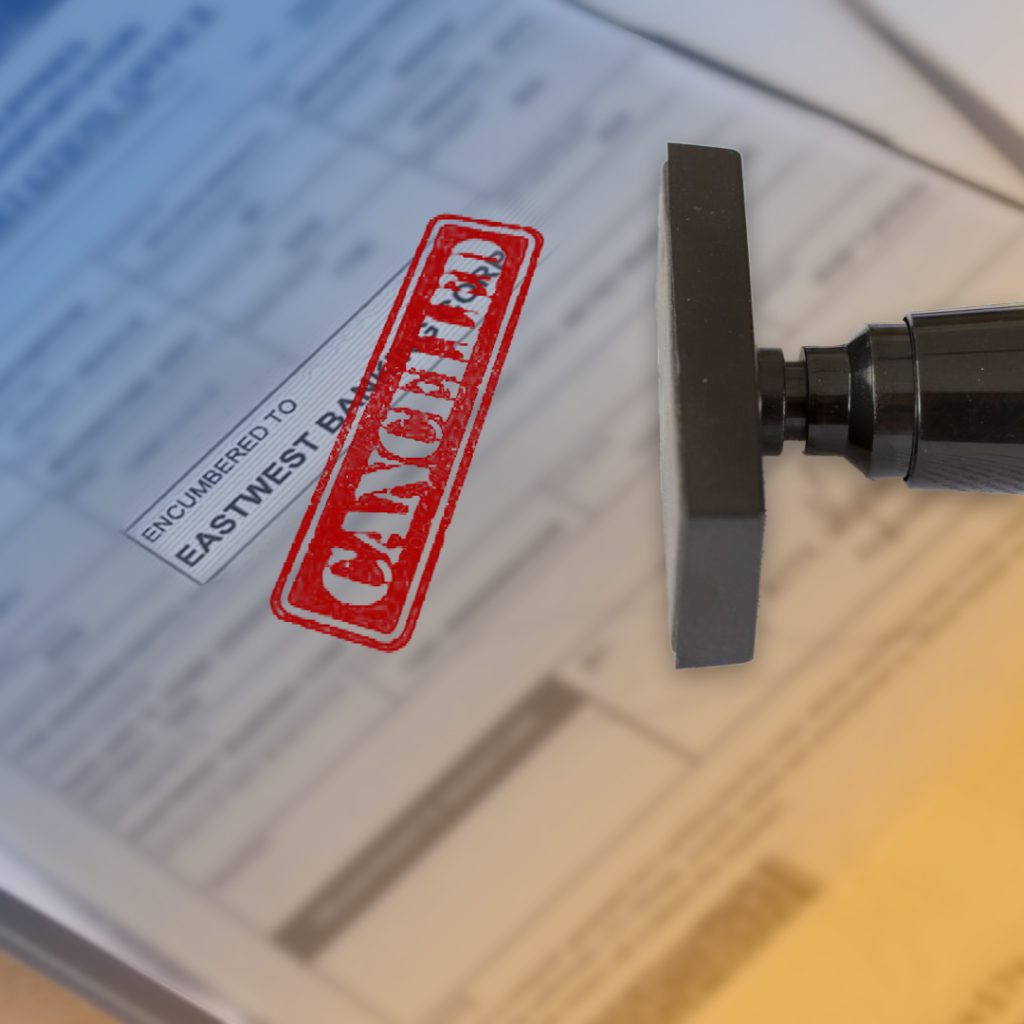
Submit the documents and request the cancellation of the encumbrance. The LTO will process and update the Certificate of Registration (CR) to reflect that it is no longer encumbered.
Step 6: Pay the Necessary Fees
Prepare to pay the processing fees for the cancellation of the encumbrance. The exact amount may vary depending on the LTO branch and specific vehicle details.
Step 7: Receive the Updated Certificate of Registration
Once the process is complete, the LTO will issue an updated Certificate of Registration (CR) without the encumbrance notation. Keep this document as proof of full ownership.
Tips for a Smooth Process
- Check with Your Bank: Some banks offer to handle parts of the process for you, such as securing the Release of Chattel Mortgage.
- Verify Document Requirements: Always double-check the requirements at your LTO branch to avoid unnecessary delays.
- Be Patient: The process may take a day or more, depending on the workload of the Registry of Deeds and LTO.
By following these steps, you can successfully cancel the encumbrance on your vehicle, giving you full ownership and greater flexibility in managing or selling your car. At Dryve PH, we assist car buyers and owners with hassle-free transactions, including the cancellation of encumbrances on vehicles. Message us today for expert guidance and a smoother process! It’s easy #JustDryve